• Welcome
  • About
  • Work
  • Contact
Menu

Nicole Ricciardi

Street Address
New York, NY
Phone Number

Your Custom Text Here

Nicole Ricciardi

  • Welcome
  • About
  • Work
  • Contact

The Taming of the Shrew

by William Shakespeare

Shakespeare and Company

August 14-24, 2025

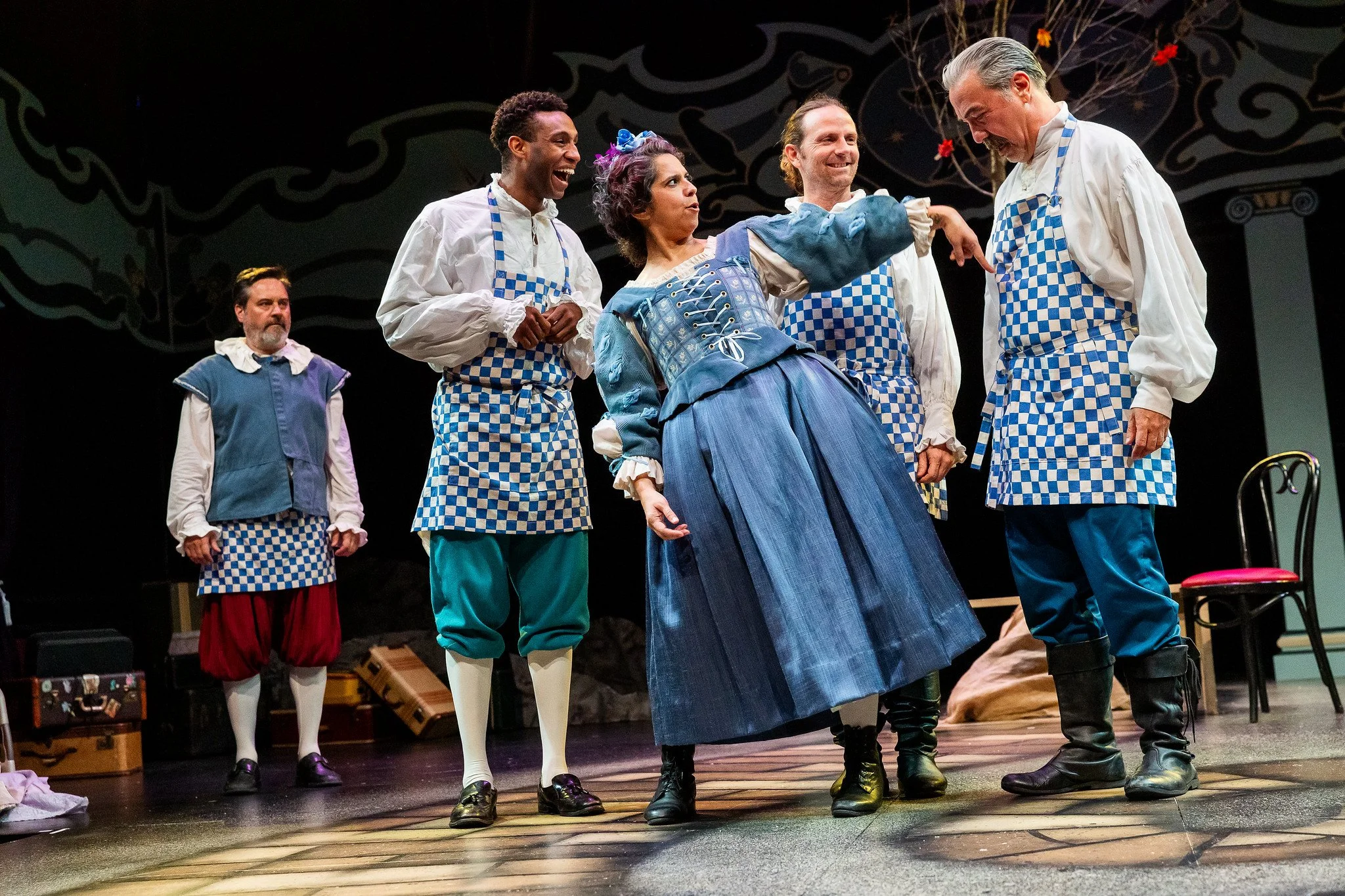
“From the moment the play opens, the staging acknowledges its own artifice. The set opens on Waiting for Godot. After a few lines, the actors are interrupted by an audience member proclaiming how boring it is and ruining the ending of Godot (spoiler, he never comes). This metatheatrical concept reminds us that we are watching a performance of a performance. The notorious “taming”
thus becomes a question: who is directing whom? And what does it cost to play along?

At the center of the production is a blazing performance by MaConnia Chesser as Katherina…She hurls her insults with ferocious wit, but beneath the barbs is a woman keenly aware of her marginalization in a patriarchal society. When she finally delivers her climactic speech on wifely obedience, Chesser delivers it not as capitulation, but as a sly act of reclamation.

Opposite her, Jamal James as Petruchio exudes charisma tinged with menace. His Petruchio is not merely a swaggering bully but a man equally ensnared in societal expectations of masculinity. Their scenes crackle with tension, and while the power imbalance is undeniable, the chemistry between the two hints at a mutual recognition that they are both actors trapped in a script they did not write.

What makes this production resonate most, however, is its willingness to let ambiguity linger. Rather than resolving the play into a neat message (whether pro- or anti-feminist) the production highlights the contradictions, inviting the audience into the discomfort. The final scene marks the final return of the interrupting audience member from the beginning; this time we writes a check to them for a large amount for succumbing to his whims. The silence that follows is deafening, as if the director has handed the question back to the audience: who tames who? The production makes clear that Shakespeare’s comedy, though problematic, can still serve as a mirror forcing us to confront enduring questions about power, gender, and identity.

Ultimately, this staging of The Taming of the Shrew does not “solve” Shakespeare’s (arguably) most troubling comedy. Instead, it embraces the play’s contradictions, presenting them with honesty, intelligence, and theatrical daring. By foregrounding performance, role-playing, and survival, the company has crafted a Shrew that is both entertaining and deeply unsettling, reminding us why this play continues to provoke debate more than four centuries after it was written.”

- Sierra Pasquale, Berkshire On Stage
The Taming of the Shrew

by William Shakespeare

Shakespeare and Company

August 14-24, 2025

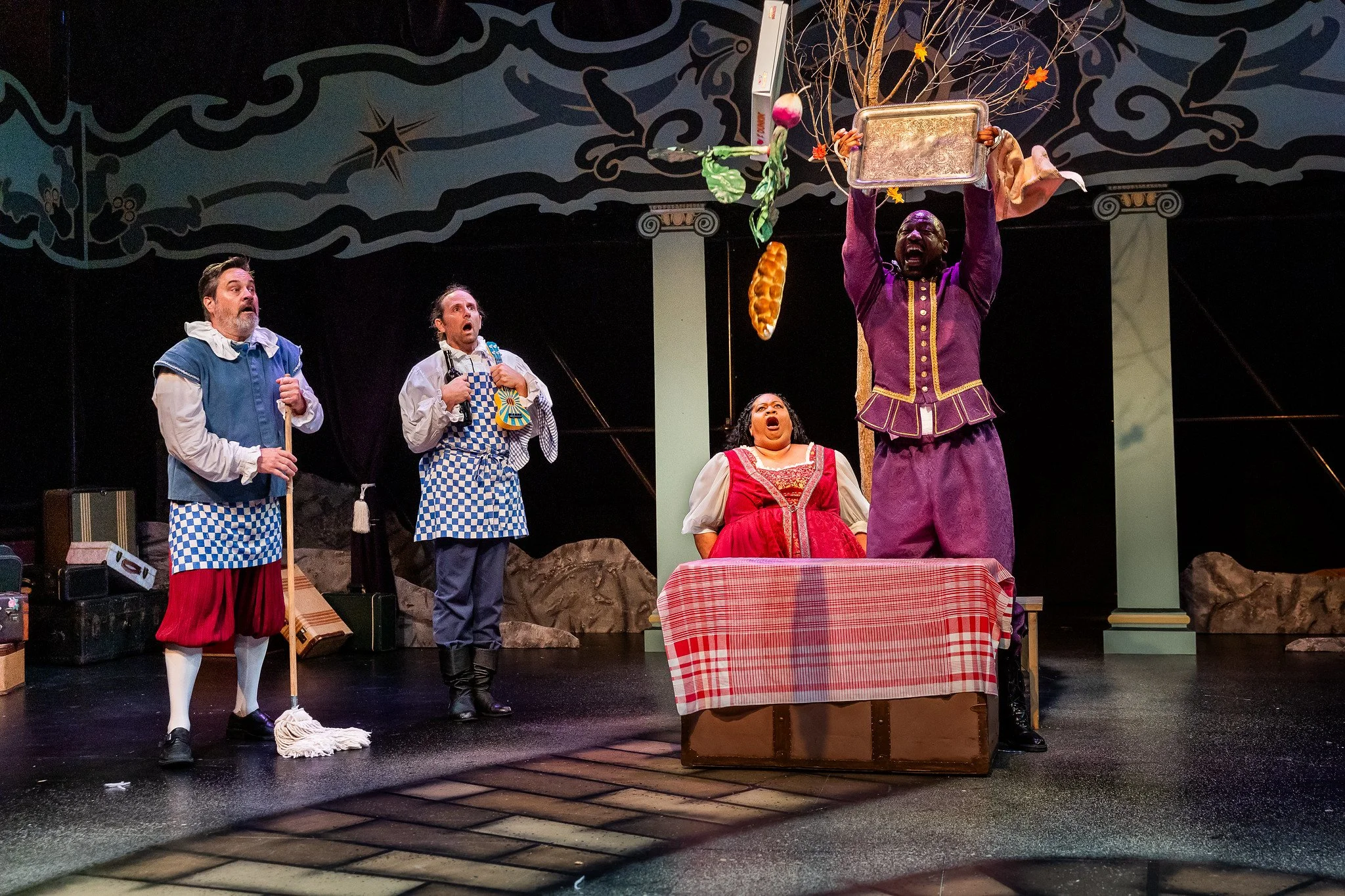
“From the moment the play opens, the staging acknowledges its own artifice. The set opens on Waiting for Godot. After a few lines, the actors are interrupted by an audience member proclaiming how boring it is and ruining the ending of Godot (spoiler, he never comes). This metatheatrical concept reminds us that we are watching a performance of a performance. The notorious “taming”
thus becomes a question: who is directing whom? And what does it cost to play along?

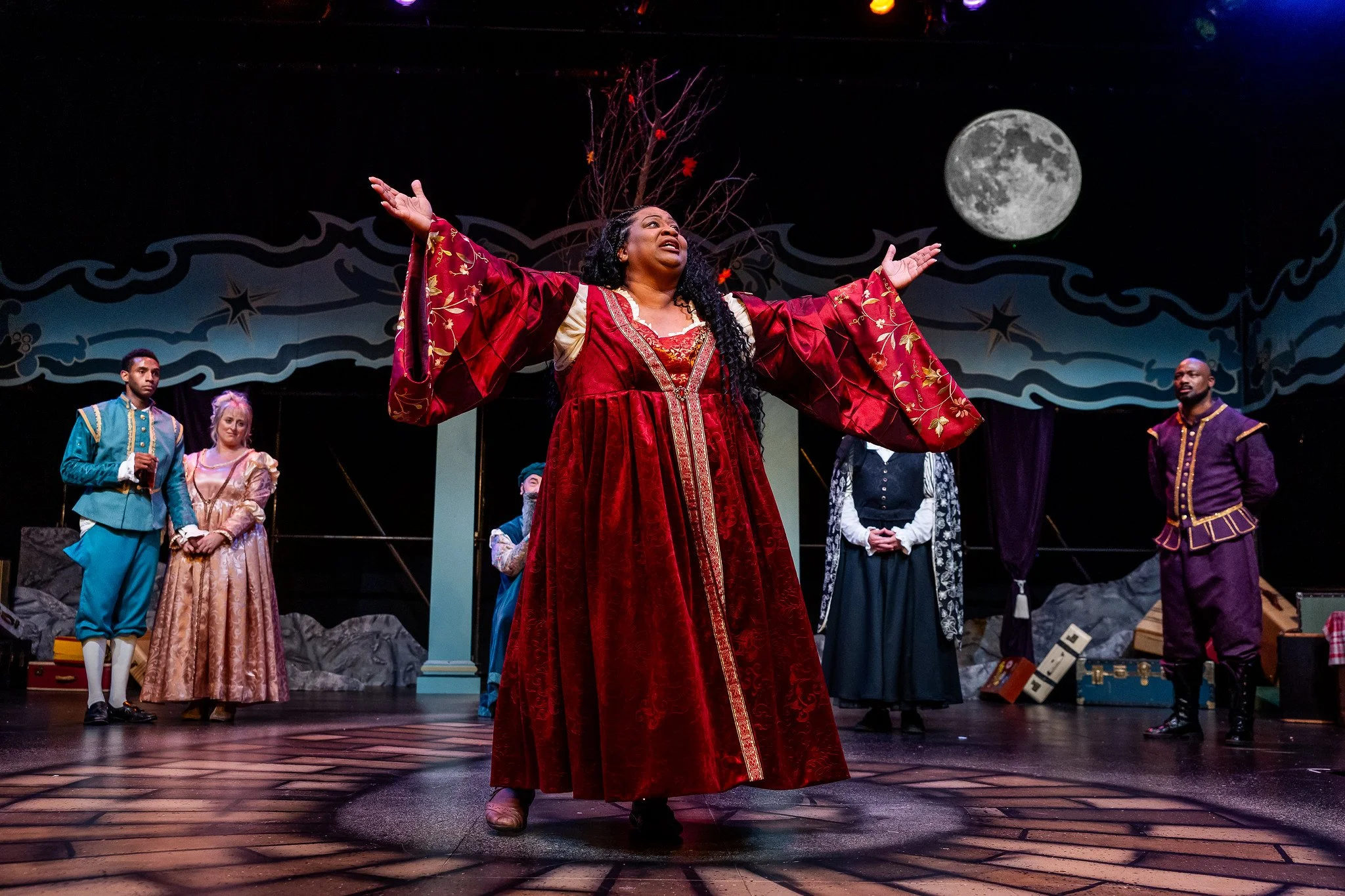
At the center of the production is a blazing performance by MaConnia Chesser as Katherina…She hurls her insults with ferocious wit, but beneath the barbs is a woman keenly aware of her marginalization in a patriarchal society. When she finally delivers her climactic speech on wifely obedience, Chesser delivers it not as capitulation, but as a sly act of reclamation.

Opposite her, Jamal James as Petruchio exudes charisma tinged with menace. His Petruchio is not merely a swaggering bully but a man equally ensnared in societal expectations of masculinity. Their scenes crackle with tension, and while the power imbalance is undeniable, the chemistry between the two hints at a mutual recognition that they are both actors trapped in a script they did not write.

What makes this production resonate most, however, is its willingness to let ambiguity linger. Rather than resolving the play into a neat message (whether pro- or anti-feminist) the production highlights the contradictions, inviting the audience into the discomfort. The final scene marks the final return of the interrupting audience member from the beginning; this time we writes a check to them for a large amount for succumbing to his whims. The silence that follows is deafening, as if the director has handed the question back to the audience: who tames who? The production makes clear that Shakespeare’s comedy, though problematic, can still serve as a mirror forcing us to confront enduring questions about power, gender, and identity.

Ultimately, this staging of The Taming of the Shrew does not “solve” Shakespeare’s (arguably) most troubling comedy. Instead, it embraces the play’s contradictions, presenting them with honesty, intelligence, and theatrical daring. By foregrounding performance, role-playing, and survival, the company has crafted a Shrew that is both entertaining and deeply unsettling, reminding us why this play continues to provoke debate more than four centuries after it was written.”

- Sierra Pasquale, Berkshire On Stage
54722677010_d9cc0fed78_k.jpg
54722559699_863dd71271_k.jpg
54722677200_1f8ea9d8ea_k.jpg
shrew 2 copy.jpg
54722340536_d9649a7eba_k.jpg

POWERED BY SQUARESPACE.